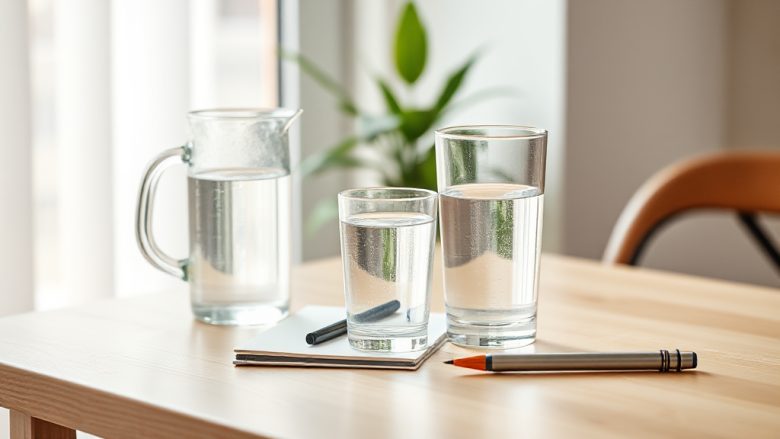
Most adults need roughly 6 to 8 cups of fluid a day, but that figure moves up or down depending on your body size, activity level, climate and diet. That’s the short answer. This post shows you how to work out your own number without counting every sip, and gives you a two-second self-check you can use for the rest of your life.
If you have ever searched how much water should you drink a day and ended up more confused than when you started, you are not alone. Advice ranges from “eight glasses, always” to “just drink when you’re thirsty” and both camps sound confident. The truth sits somewhere in the middle, and it is far more practical than any single rule.
Your Daily Target and What Changes It
The often-quoted eight glasses a day is a decent starting point, not a law. Health bodies generally put total daily fluid intake for adults somewhere around 2 to 3 litres, which works out at roughly 8 to 12 cups. But that number covers all fluid, not just what comes out of a glass. Tea, coffee, milk, soup, juice and the water locked inside fruit and vegetables all count toward your total.
Here is the part most articles skip: food usually supplies about 20 percent of your daily fluid. If you eat a lot of watery produce, you are already partway there before you drink anything.
So how do you land on a figure that actually fits you? Start with a base of about 6 to 8 cups of drinks per day, then adjust:
Body size. A larger person has more tissue to hydrate. If you weigh considerably more than average, nudge your intake up. A rough guide some people use is about 30 to 35 millilitres of fluid per kilogram of body weight per day, which for a 70 kg adult lands near 2.1 to 2.5 litres. That includes food, so you would drink less than that.
Activity. Sweating is the biggest variable most people ignore. An hour of hard exercise in warm conditions can cost you a litre or more. Add a cup or two for a normal workout, and more if you are sweating heavily or going long.
Climate and season. Hot weather, dry air and heated indoor spaces all raise your needs. A humid summer day can push your requirement up by 50 percent or more compared with a mild spring afternoon.
Pregnancy and breastfeeding. Both increase fluid needs noticeably. Breastfeeding in particular can add several cups a day to the target.
Illness. Fever, vomiting and diarrhoea drain fluid fast. During a bout of illness, drinking steadily matters more than hitting a precise number.
Age. Older adults often feel thirsty less often, which makes deliberate drinking more important. Children need less in absolute terms but proportionally more for their size.
Caffeine and alcohol. The old idea that coffee dehydrates you has been softened by better research. A few cups of tea or coffee count toward your fluids. Alcohol is different: it pushes fluid out, so a heavy night needs water alongside it, not instead of it.
If you want one simple rule that covers most situations: aim for 6 to 8 cups of drinks spread across the day, add a cup for every hour of activity or hot weather, and drink to thirst in between. Thirst is a reliable signal for healthy adults. It is not perfect, and it fades with age, but it is a better guide than forcing down a fixed volume you read somewhere.
One caution worth stating plainly: you can drink too much. Very large amounts of water in a short time can dilute the sodium in your blood, a rare but serious condition. Spreading your intake across the day avoids this. There is no prize for chugging four litres before noon.
If you have heart, kidney or liver conditions, or you take diuretics, your safe range may be different. That is a conversation for your doctor, not a blog post.
The Urine Colour Check: Your Two-Second Hydration Test
Forget apps and water bottles with markings. Your body gives you a free hydration readout every time you use the bathroom, and it is more personal than any general guideline.
Look at the colour of your urine. Pale straw or light yellow means you are well hydrated. That is the target. Dark yellow or amber means you need to drink more. If it looks like apple juice, you are behind and should have a glass of water soon.
Clear and colourless sounds impressive but usually means you are drinking more than you need. If you are up several times a night to urinate, or you feel bloated and sloshy, ease off. More is not better past a point.
There are a few honest caveats. Some vitamins, particularly B-complex, turn urine bright yellow and can fool you. Beetroot, berries and certain medications can tint it pink or dark. First thing in the morning, urine is naturally more concentrated, so judge by what you see mid-morning and through the afternoon rather than the very first visit of the day.
Frequency is the second half of the check. Most adults urinate around four to seven times a day when well hydrated. If you are going once or twice and it is dark, drink up. If you are going constantly and it is always clear, you can ease back.
Pair that with how you feel. A dry mouth, a dull headache, tiredness in the afternoon and difficulty concentrating are all common early signs of mild dehydration. They are easy to blame on a bad night’s sleep or a heavy lunch, but often a glass of water fixes them within twenty minutes.
Here is a practical routine that works for most people without any tracking:
Have one glass of water when you wake up, since you lose fluid overnight through breathing and sweat. Drink with meals, which makes the habit automatic. Keep a glass or bottle within reach during the day so you sip without thinking. Drink a cup before, during and after exercise. And check your urine colour once in the afternoon as a simple reset.
That is really all there is to it. The question of how much water should you drink a day has a boring, useful answer: enough that your urine stays pale, your mouth is not dry, and you are not running to the bathroom all evening. Start with 6 to 8 cups, adjust for heat and sweat, and let your body’s own signals do the fine-tuning. Your kidneys have been managing this for your whole life. You just need to give them something to work with.